

Estimated reading time: 8 minutes
People sometimes forget that the smallest and most convenient storage space is in their own heads. If you find yourself in the midst of a disaster and you need to either build or fix something, having the necessary knowledge and experience in your mind instead of in a book will hugely benefit your ability to survive.
And if there's something you need from your neighbors but you're not willing to trade any of your supplies, you could do some work for them in exchange.
But what sort of skills will be the most useful after TEOTWAWKI? Knowing Microsoft Office won't do you much good, but knowing how to make soap could mean the difference between health and sickness. Or maybe you could trade your soap for more food.
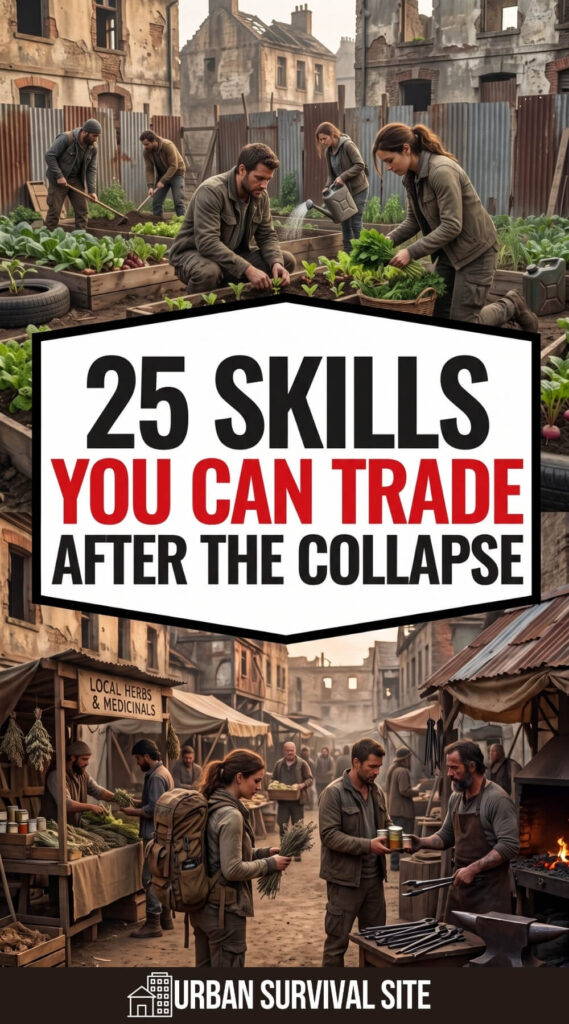
The point is, you need to learn a few skills that will be useful in a post-disaster world. I suggest you take up one as a hobby while you still have time. Here, then, are 25 skills you can trade after TEOTWAWKI, listed in alphabetical order.
Want to save this post for later? Click Here to Pin It On Pinterest!
Animal Husbandry
The ability to raise animals such as chicken for eggs, rabbits for meat, goats for milk, etc. There is a limit to how much meat and dairy people will be able to store, and there will be a huge demand for fresh food.
Beekeeping
Managing bee colonies gives you honey, which is a valuable food source and natural sweetener that barely ever spoils. Just as important, your bees will pollinate the gardens and crops around you, which keeps everyone's food production going. Between the honey, the beeswax for candles, and the pollination, a beekeeper brings a lot to the table when it's time to trade.
Blacksmithing
Once the stores are empty and there's no way to order new tools, someone's going to have to make and repair them. A blacksmith can turn scrap metal into knives, nails, hinges, and all sorts of hardware people will desperately need. It's become a rare skill these days, which means anyone who can work a forge will be in high demand.
Brewing and Distilling
The ability to brew beer, make wine, or distill spirits can be a valuable trade skill. These beverages not only serve as morale boosters but can also be used for bartering. Moreover, alcohol can serve as a disinfectant or a base for herbal tinctures.
Butchering
Hunting and raising animals is one thing, but turning a carcass into proper cuts of meat is a whole different skill. If you know how to butcher a deer, hog, or steer without wasting anything — and how to preserve what you can't eat right away — you'll be valuable to anyone who brings in more game than they know what to do with. Offer to process someone's kill in exchange for a share of it.
Clothing
If times are tough, people won't be able to go out and buy new clothes and shoes any time they need them. They'll have to fix shoes, patch torn pants, and mend shirts. This is an important skill that has become very rare in modern society.
Communication
If the infrastructure breaks down, common means of communication like cell phones and the Internet will be unreliable, if not gone completely. In that case, people who know how to use all kinds of radios, especially HAM radios, will be in high demand.
Construction
This is especially valuable without power tools. It's worth knowing how to properly fix roofs, board up windows, and build things like sheds or outhouses using nothing but basic hand tools. When buildings start falling into disrepair and there's no contractor to call, anyone who can frame a wall and swing a hammer will have plenty of work to trade for.
Cooking
People are going to get sick and tired of eating canned soup and freeze-dried food. If you can cook a tasty meal and dessert without power, people in the neighborhood will thank you with favors or with supplies they don't need.
Dental
Most people live their entire lives without realizing how much misery they would experience if not for the dentist. A perfect example of this is in the movie Cast Away where the main character has to knock out one of his own teeth. Someone who knows how to clean and remove teeth could be a great help.
Electrical
Anyone who still has power after a long-term disaster is going to be the envy of the neighborhood, and most folks won't have the first clue how to wire up a solar panel or keep a generator running. If you understand electrical systems, you can help people set up battery banks, hook up backup power, and troubleshoot the wiring when something goes wrong. That's the kind of skill people will happily trade food or supplies for.
First Aid
People tend to take doctors for granted, but it will quickly become apparent how important they are and why people should learn first aid skills. Without doctors, people will need help sewing up wounds, setting bones, performing CPR, and determining which herbs and medications help with which ailments.
Food Storage
Canning, dehydrating, sealing, smoking, etc. Most people don't know how to store food without a refrigerator. Offer to preserve someone's leftovers in exchange for help or supplies.
Gardening
Here's yet another skill that's become rare in modern times. Learn to grow fresh herbs, fruits, and vegetables, preferably indoors or in a secure backyard where your crops won't be an easy target for hungry neighbors. Once the grocery stores are empty, a person who can reliably grow food will be one of the most valuable people around.
Gunsmithing
If you're facing a long-term disaster, people are going to need guns for hunting and self-protection. It will help if you know how to repair guns and reload shells. But only help people you completely trust.
Herbal Medicine and Natural Remedies
In a world where conventional medical supplies are scarce, the ability to use plants and natural substances for medicinal purposes becomes crucial. This includes knowledge of local flora, preparation of herbal remedies, and understanding their applications for various health conditions.
Hunting and Fishing
When food supplies get low and gardens fall short, people are going to have to hunt and fish. If you can provide meat for your friends and family, they'll have time to take care of other necessities.
Leatherworking
When people can't just buy new boots or belts, they'll need someone who can work with leather. If you can tan hides and turn them into shoes, belts, sheaths, and straps, or repair the leather goods people already own, you'll have a steady stream of customers. It's a skill that pairs perfectly with hunting and butchering since it puts those animal hides to good use.
Mechanic
Even if we have a depression worse than the one in the 1930's, most people are still going to have jobs (remember, unemployment only got up to 25% in the 1930's), which means they'll need a way to get to work.
The problem for many people is that they won't be able to afford to get their cars fixed. If you learn how to work on cars, or any machine for that matter (lawnmowers, generators, etc.), you'll have a particularly valuable skill.
Midwifery
Life doesn't stop after a disaster, which means babies will still be born, only now there won't be a hospital to go to. Knowing how to safely deliver a baby and care for the mother afterward is a skill that could save two lives at once. Very few people have this knowledge, so a good midwife will be worth their weight in gold.
Plumbing
People will still need their sinks and toilets working, even more so if they're hauling water and washing clothes by hand. Learn how to clear clogs, fix running toilets, and replace leaky or burst pipes with simple tools. It's dirty work most folks would rather pay someone else to handle, which makes it a solid skill to trade.
Security
You can make your home more secure, but after TEOTWAWKI you're still going to need someone to stand guard when others are busy or sleeping. This person will need to know how to use weapons and be practiced in hand-to-hand combat.
Soap and Candle Making
If the disaster drags on for a while, store-bought soap and candles will run out fast, and people will need both to stay clean and to keep the lights on after dark. If you know how to make them yourself from basic ingredients like lye, fat, and wax, you'll always have something worth trading. It's an easy skill to pick up now, and the supplies store well, so there's no reason not to learn it ahead of time.
Teacher
If the schools are closed, it's still important that children spend time reading and learning. Remember, these are the children that will grow up and rebuild the world.
Veterinary Care
With so many people raising chickens, goats, and other animals for food, keeping those animals healthy becomes critical. A sick animal can mean the difference between a family eating well and going hungry. If you know how to treat common illnesses and injuries in livestock, you'll be a welcome sight on any homestead, and people will gladly trade for your help.
Like this post? Don't Forget to Pin It On Pinterest!
You May Also Like:

Related Posts:
 30 Basic Skills You’ll Have To Learn After The Collapse
 10 Handyman Skills You’ll Need During the Collapse
 40 Sites Where You Can Trade & Barter For What You Need
 30+ Items You Can Trade After The System Breaks Down
 5 Most Important Survival Skills To Have After SHTF
 10 DIY Survival Skills You Can Teach Yourself
Related Posts:
30 Basic Skills You’ll Have To Learn After The Collapse
10 Handyman Skills You’ll Need During the Collapse
40 Sites Where You Can Trade & Barter For What You Need
30+ Items You Can Trade After The System Breaks Down
5 Most Important Survival Skills To Have After SHTF
10 DIY Survival Skills You Can Teach Yourself