

Estimated reading time: 12 minutes
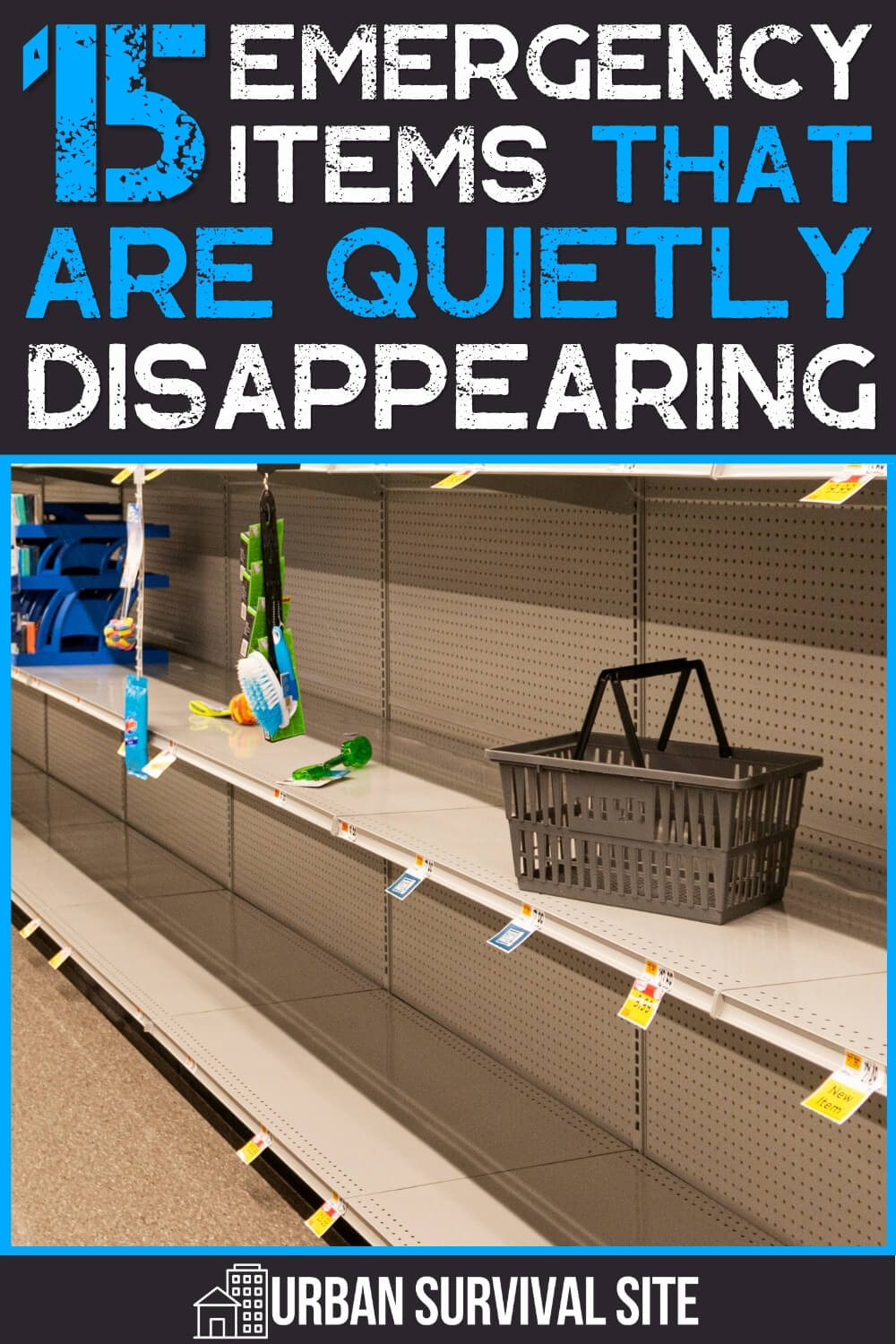
Experienced preppers have been paying close attention lately. The economy's looking shakier by the month, conflicts are spreading across the Middle East and Europe, and there are plenty of other signs that hard times are on the way. Which is why preppers are quietly stocking up.
The obvious survival items (your classic beans, bullets, bandages, etc.) are in high demand, and manufacturers are working hard to keep them in stock. So for right now, you shouldn't have too much trouble finding the essentials. However, there are many less common emergency items that tend to get overlooked.
Duct tape, for example. There are countless reasons you might need duct tape in a long-term disaster, but the average person doesn't know that. Experienced preppers, on the other hand, understand the value of these items, which may explain why they're starting to disappear from the shelves. Just the other day, I couldn't find a single bottle of hydrogen peroxide at Walmart or any of the stores I usually go to.
Want to save this post for later? Click Here to Pin It On Pinterest!
This is probably why the Youtube algorithm gods recommended this video to me. It's from the channel, Prepping With Mike Dawson, and he lists some other items that are starting to disappear. You can watch his video and read the list below.
15. Petroleum Jelly
Most people see petroleum jelly and think chapped lips. Preppers see a fire starter, a wound protectant, a rust preventer, and a cold-weather skin shield all in one little tub.
The big one is fire. Cotton balls smeared with petroleum jelly catch a spark almost instantly and burn for several minutes, which gives you plenty of time to get a fire going even when conditions are wet, windy, or cold. It's one of the most reliable DIY fire starters out there, and it's taught in plenty of wilderness survival courses.
But it doesn't stop there. A thin layer on exposed skin helps protect against windburn in harsh cold. It keeps minor wounds moist under a bandage so the dressing doesn't stick to healing skin. It protects metal tools and battery terminals from corrosion, and you can rub it on container threads and rubber seals to help keep them airtight.
14. Non-Iodized Salt
Most of us grab iodized table salt out of habit, but plain non-iodized salt (like pure sea salt or canning and pickling salt) is the better choice for preparedness.
The difference isn't about flavor. It's about what's added. Iodine and anti-caking agents can cause problems in some uses where pure salt works just fine.
For example, mix about 1 teaspoon of pure salt into 1 cup of clean water, and you've got a basic saline solution that you can use for rinsing wounds. It's not the same as sterile saline from a pharmacy, but it's a lot better than nothing when the pharmacy shelves are empty.
Pure salt is also food for food preservation. It's used in dry-curing meat, preserving hides, and lacto-fermentation, which lets you keep vegetables for a long time without refrigeration or canning equipment. USDA canning guidance calls for pure salt in brine recipes because additives can mess with the results.
13. Hydrogen Peroxide (3%)
Chances are you've already got a half-used bottle of this under your bathroom sink. Preppers buy the big bottles on purpose, and they buy more than one.
At 3%, the CDC considers hydrogen peroxide a low-level disinfectant that works against bacteria, viruses, and fungi when you give it enough contact time. You can use it right out of the bottle on countertops, bathroom fixtures, and doorknobs, which comes in really handy during an illness outbreak, and it breaks down into water and oxygen, so there's no need to rinse.
It's also sometimes used for a first cleaning of a dirty wound to help loosen debris. Just don't keep using it on a wound over and over, since it can actually slow healing. And for drinking water, stick with proven methods like boiling or unscented bleach rather than relying on peroxide.
An unopened bottle lasts around three years, but once it's open, it starts losing strength within about six months. Keep it in its original dark bottle (or a dark spray bottle) to help it last. You'll find it in the pharmacy section, and it's cheap enough to grab two at a time.
12. Nitrile Gloves
When you're dealing with illness, treating a wound, or handling water you're not sure about, your bare hands are one of the easiest ways to spread contamination. There's a reason gloves and hand hygiene are the first line of defense in the CDC's standard infection-control precautions. And after floods, long power outages, and other disasters where sanitation breaks down, illness tends to spread fast.
Nitrile gloves are also useful for handling fuel when you're filling a generator, processing raw meat, working with harsh cleaning chemicals, and cleaning up storm debris. Nitrile is the way to go instead of latex, since latex allergies are fairly common and can be serious. They'll last around three to five years if you keep them away from sunlight and heat. Look in the pharmacy or cleaning aisle, and grab at least two boxes.
11. Birthday Candles
I know, this one sounds a little silly, but a multipack of birthday candles is only a couple dollars, and they're a surprisingly handy backup light source.
Each candle burns for roughly 15 to 20 minutes, so a pack of 24 gives you somewhere around six to eight hours of reading light without using up your fuel or batteries. That's a lot of light for a few bucks. Their small size is a plus, too. Stick one in a bit of clay, a bottle cap, or a jar lid, and you've got a small, stable light that's easy to manage.
Good lighting matters more than people think during an outage. When you can't see, you trip over things, knock stuff over, and misread labels (including medication labels). Birthday candles also make great fire-starting helpers, since you can hold one under slightly damp kindling long enough to dry it out and get it burning. As always, never leave a lit candle unattended.
10. Instant Dry Yeast
Unless you bake, you probably walk right past the yeast. But a strip of individual dry yeast packets could be one of the most valuable items in your pantry during a long-term emergency.
The big reason is bread. With flour, water, salt, and yeast, you can bake an actual loaf of bread when store-bought bread isn't an option. That's a huge deal for both calories and morale, and those basic dry ingredients store well and don't take up much room.
Yeast also opens up the door to fermentation more broadly, which people have relied on for thousands of years. Individual sealed packets are the best format, since each one stays fresh until you open it. Unopened, they usually last about two years (longer in the fridge or freezer). Look in the baking aisle and grab a couple of strips.
Related: 20 Survival Bread Recipes for Emergencies
9. Unscented Baby Wipes
When you don't have running water, hygiene goes downhill fast, and that's more than just uncomfortable. Sweat, grime, and bacteria can lead to skin infections, which are a common problem in disaster situations. Baby wipes are one of the easiest ways to stay reasonably clean without water, and the military uses the same kind of waterless approach in the field.
The unscented part matters. Fragrances can irritate sensitive skin, and in some outdoor situations you just don't want to smell like a flower shop. Wipes are also good for wiping down food prep areas and cleaning your hands, and wiping your neck and wrists with a cool wipe can help you cool down in the heat. Head to the baby care aisle and grab a travel pack for each kit plus a full-size pack for the house.
8. Safety Pins
In first aid, safety pins are what you use to secure a triangular bandage as an arm sling. Without one, that sling is just a piece of cloth draped over someone's arm. They're also great for quick gear repairs, like fixing a torn pack strap, a ripped tent, a busted zipper, or clothing when you don't have a needle and thread.
Here's a fun one most people don't know: If you stroke a steel pin repeatedly in one direction with a magnet and float it on a leaf in still water, it'll roughly line up north-south. It's not a real compass, but in a true navigation emergency, it's better than nothing. Check the sewing and notions aisle and buy a couple of packs so you can put one in every bag.
Related: 8 Survival Hacks Using Safety Pins
7. White Rice
Obviously, rice is a cheap, filling source of calories. But it's also one of the easiest foods on your stomach when you're sick. Plain white rice is a go-to food for recovering from an upset stomach, and stomach bugs from bad water or spoiled food are common after a disaster.
White rice also stores incredibly well. It'll last several years in its original packaging if you keep it cool and dry, and it can last decades in Mylar bags with oxygen absorbers. The dry goods aisle is where you'll find it. Grab a few bags each trip until you've built up a solid stockpile.
6. Heavy-Duty Aluminum Foil
Most people think of aluminum foil as a kitchen thing. Preppers see it as a multi-tool.
You can wrap food in it and cook right on hot coals with no pots or pans needed. You can use it to line a homemade solar oven to cook with sunlight when fuel is scarce. You can lay it under your sleeping area to help reflect body heat back at you. You can shape it into a bowl or trough to carry water a short distance, or make a funnel for pouring liquids.
It also works as a signaling device. Shiny foil reflects sunlight and can help you get the attention of rescuers from a distance. And of course, it's great for wrapping and sealing food. You'll find it in the kitchen storage aisle. Buy two rolls.
Related: 33 Prepper Uses for Aluminum Foil
5. No. 2 Pencils
Most people skip these because they already have pens. But pencils beat pens in a lot of emergency situations.
Pen ink can stop flowing in the cold, smear when it gets wet, and dry out if a pen sits unused for too long. Pencils don't have any of those problems. They work in the cold, they work on damp paper, and they can write on things like wood, plastic, and rough surfaces. That makes them perfect for marking maps and leaving emergency notes.
They also have a couple of bonus uses. Rub pencil graphite into a sticky lock or a stuck zipper, and it works as a dry lubricant when you don't have oil. And if you have a pencil sharpener, you should know that pencil shavings make great tinder.
4. Glucose Tablets
You'll usually find glucose tablets near the diabetes section of the pharmacy, but they aren't just for diabetics.
Your brain runs on glucose. When your blood sugar drops from hard physical work, skipped meals, stress, cold, or illness, your thinking can get foggy before you even feel physically weak. Your judgment slips, and you might not even notice it's happening.
Each tablet has about 4 grams of fast-acting sugar that gets into your system quickly without needing to be digested like regular food. They're the standard first response for mild low blood sugar episodes in people with diabetes, and they can give anyone a quick boost during a demanding emergency, like evacuating on foot or clearing storm debris.
3. Duct Tape
Duct tape can hold together a makeshift splint made from sticks or a rolled-up magazine, which is a technique covered in wilderness first aid. It can seal cracked windows, torn tents, and split tarps well enough to hold up against wind and rain. It can patch leaky hoses, cracked containers, and torn rain gear.
Wrapped around your pant cuffs and the tops of your boots, it helps keep ticks and other bugs from getting to your skin. And if you write on it with a marker or pencil, it makes a weatherproof note or trail marker. It lasts a long time as long as you keep it away from extreme heat. Check the hardware or automotive aisle and buy two rolls.
2. Manual Can Opener
Plenty of households have dozens of cans of beans, veggies, and soup stored away but only an electric can opener in the kitchen. When the power goes out, that opener is useless, and so is all that canned food if you can't get it open. It sounds almost too obvious to mention, and that's exactly why people forget it.
In a pinch, a can opener can also help you cut through plastic packaging or light cord if you don't have a knife handy. Keep it dry and it'll last pretty much forever. Buy two from the kitchen aisle: one for the pantry and one for your go-bag.
1. Collapsible Water Container
Water is the most important resource in pretty much any emergency. You'll start feeling the effects of dehydration within a day, and after about three days without water, you're in serious trouble. The CDC recommends at least one gallon of water per person per day for drinking and basic sanitation. For a family of four, that's 12 gallons for just three days.
That's a lot of heavy, bulky water to store, especially in a vehicle. A collapsible container folds up flat when it's empty, so it barely takes up any space, but it's ready to go the moment you need it. If you have to evacuate suddenly, you can fill it from your tap, bathtub, or anywhere else safe and bring that water along. Without one, you're stuck with whatever bottles you happen to have lying around.
Make sure you get one made from food-grade, BPA-free material. Buy one for every vehicle and every emergency bag in your house. If you keep water stored in one, swap it out about every six months.
None of these items are exciting, and that's kind of the point. They're cheap, easy to overlook, and incredibly useful when the SHTF.
Like this post? Don't Forget to Pin It On Pinterest!
You May Also Like: