

Estimated reading time: 9 minutes
Every year thousands of people around the world die from hypothermia, and most of them weren’t lost in the wilderness. They were at home in a house that got too cold.
That risk is getting harder to ignore. New data centers are going up all over the country, and they use ungodly amounts of electricity. That puts more strain on a power grid that already has trouble keeping up during winter storms.
Now, rolling blackouts and long outages are more likely than ever. If you remember what happened in Texas in 2021, you know how quickly a winter power outage can turn into a life-or-death situation.
And here’s the thing: even if you have a gas furnace, it probably won’t help you in a blackout. Most modern furnaces need electricity to run the blower fan, so when the power goes out, so does your heat.
That’s why you need a few backup options that don’t need a single watt of electricity. But you’ve got to be careful. Heating your home with anything that burns fuel comes with the risk of carbon monoxide poisoning. Safety has to come first.
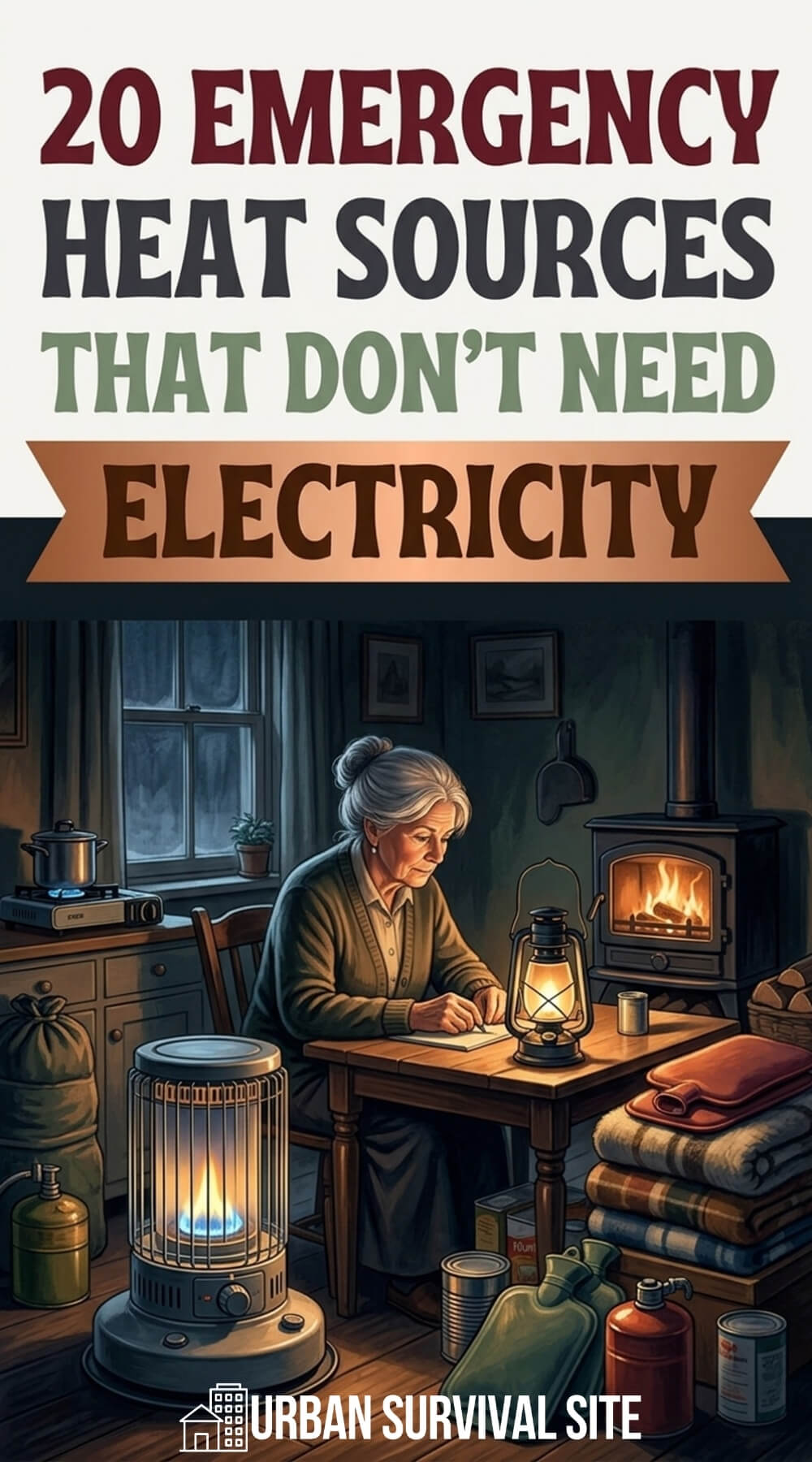
Want to save this post for later? Click Here to Pin It On Pinterest!
I recently found a great video on the YouTube channel, The Bug Out Location. It covers 20 emergency heat sources and strategies for staying warm when the grid goes down. You can watch the video and read the list below. (Note: Be sure to visit their website. TheBugOutLocation.net.)
Start With Yourself
Before you worry about heating a room, worry about heating you. Your body is the heater. The goal is to hold onto the heat it’s already making.
1. Warm Gloves
You lose a lot of heat through your hands, and once your fingers go numb, it gets hard to do even simple things. Keep a few pairs of good insulated gloves in the house, not just in the car.
2. Wool Socks
Feet matter just as much as hands. Merino wool socks are great because they stay warm even when they get a little damp, and they don’t get as stinky as synthetic socks after a few days of wear.
3. Hats and Neck Gaiters
Your head and neck are another big heat-loss zone. A warm hat (the fuzzy Elmer Fudd style with ear flaps works great) and a neck gaiter will keep a lot more heat where it belongs.
4. Hand and Foot Warmers
Disposable chemical hand warmers are cheap, need no power, and work for hours. Toss a few in your gloves, boots, or pockets, or under the blankets at the foot of your bed.
5. Layering
This one’s old advice, but it’s old because it works. Use three layers:
- Base layer: wicks sweat away from your skin
- Insulating layer: fleece or wool to trap body heat
- Outer shell: blocks wind, and it doesn’t have to be thick
Lots of thin layers beat one heavy coat because they trap more warm air, and you can add or take off a layer as needed.
6. Battery-Powered Heated Blankets and Clothing
Okay, these technically use electricity, but very little. A 10,000 mAh power bank can run a heated blanket, vest, or shawl for a few hours. A typical space heater draws 1,500 watts, so a small solar panel or a car charger can easily keep these going in an outage.
7. Mylar Emergency Blankets
They look a little gimmicky, but they really work. EMS crews and fire departments use them for a reason. Mylar doesn’t make heat. It reflects your body heat back at you. They’re best used with a sleeping bag or regular blanket, not alone. They’re dirt cheap (a 10-pack costs a few bucks), and they’re useful for plenty of other things too.
8. Body Heat (Huddle Up!)
Back in colonial times, whole families slept in one room, and that was on purpose. Every person is basically a small heater, so getting everyone into the same space makes a big difference.
Heat a Small Space, Not the Whole House
In an outage, don’t even try to heat your whole home. Pick one small space and focus all your efforts there.
9. Choose One Room in the Middle of the House
Pick a room that’s as far from the outside walls as you can get, with as few windows as possible. A bedroom in the middle of the house is ideal. The smaller the room, the easier it is to warm up.
10. Pitch a Tent Indoors
Want to go even smaller? Set up a two- or four-person tent inside that room. Lots of tents don’t need stakes, so you can set them up right on the floor. Your body heat stays in a tiny space, so it warms up fast.
11. Build a Blanket Fort
No tent? Do what you did as a kid and build a fort out of chairs and blankets. It does the same job, and your kids will probably think it’s the best power outage ever.
12. Insulate Your Windows
Windows leak a lot of heat. Cover them with window insulation plastic, then hang thick blankets or thermal curtains over them to block cold air.
13. Use South-Facing Windows for Free Solar Heat
Here’s the exception to the “cover your windows” rule. If your room has a south-facing window, open the curtains during the day and let the sun in. Even on cold days, sunlight can warm a room a lot. Just close everything back up once the sun goes down.
Emergency Heaters (From Weakest to Best)
Now let’s talk about things that actually raise the temperature in the room.
14. Clay Pot Candle Heaters
You’ve probably seen these all over the internet. Put some tealights under an upside-down terra cotta pot, and supposedly it can heat a room. The truth? You might gain a degree or two.
A candle puts out roughly 100 BTUs of heat, and a clay pot can’t change that. It just spreads the heat out more slowly. Some of the heaters below put out over 10,000 BTUs, so there’s no comparison. Fine as a last resort, but don’t count on it.
15. Canned Heat and Vesta-Style Heaters
Canned heat (like Sterno) works decently. Pair it with a stove-heater like the Vesta from InstaFire, and you’ve got a little unit with a fan on top that heats and lets you cook. In testing, one warmed a small bedroom by 6 or 7 degrees.
Cheap canned fuel puts out less heat than the high-heat versions, so the high-heat ones are worth the extra cost. They’re not the best main heat source, but they’re good to have because they do two jobs.
16. Propane Heaters
Now we’re talking. Portable propane heaters like the Mr. Heater Buddy are rated for indoor use and come with an oxygen depletion sensor and an automatic shutoff if they tip over. They run on 1-pound propane canisters, or you can hook one up to a 20-pound tank with a hose and filter.
Hunters and campers use them all the time, and they’re about as plug-and-play as it gets. Always run a carbon monoxide detector in the same room.
17. Kerosene Heaters
Kerosene heaters put out lots of heat, even a small 10,000 BTU model is plenty for one room, and some models even let you cook on top. Kerosene stores well for years if you store it properly, and it’s reasonably priced.
A few downsides: make sure the model is rated for indoor use, expect some smell and moisture, and don’t run one while everyone’s asleep. You’ll need someone awake keeping an eye on it.
18. Diesel Heaters
According to the video, this is the best option of the bunch. Diesel heaters put out a ton of heat, and diesel tends to be one of the cheapest fuels around. It’s also less volatile than other fuels and stores well for a long time.
The catch is that they need some setup. You’ll need to vent the exhaust outside, for example by putting a board with a hole drilled through it in a window opening, or by keeping the heater outside and piping the warm air in. Once it’s set up, though, a small unit can heat an average bedroom so well that you’ll be turning it down.
19. Wood-Burning Stove or Fireplace
If you’ve got one, you’re way ahead of most people. A freestanding wood stove beats a fireplace because heat radiates off the whole stove into the room, and a stove running full blast can make a 400–500 square foot room almost too hot.
If you have a fireplace insert that depends on a blower fan, leave the door open during an outage so it works like a regular fireplace. Either way, keep a couple of cords of seasoned firewood on hand and have the chimney cleaned before winter.
Not Great for Heat (But Still Worth Having)
20. Oil Lamps and Alcohol Stoves
Oil lamps, paraffin lamps, and small alcohol hiking stoves get suggested as heat sources a lot. They aren’t good ones. The heat you get depends on how big the flame is, and these flames are small.
Alcohol stoves also only burn for about 20 minutes, and you can’t refill them while they’re lit. They’re still worth keeping around, though. Oil lamps give you light (a good Dietz lantern is great to have), and alcohol stoves are handy for warming food indoors when you don’t want to go outside and fire up the grill.
Don’t Skip the Safety Gear
The last thing you want in an emergency is to make it worse. Heating your house is great, but if you set it on fire, you’ll be standing outside in the cold pretty fast. If you use any of the heaters above, keep these around:
- Carbon monoxide detectors: Battery-powered, in every room where you’re running a heater. Some combo units also detect natural gas leaks.
- Smoke detectors: Check the batteries before winter starts.
- Fire extinguishers: Get quality ABC-rated ones you can trust, not the cheapest thing you can find online. Keep one near the fireplace and one in the garage.
- First aid kit with burn supplies: Burn dressings and gel.
- Flashlights and headlamps: Because it’ll be dark when you need them most.
- An evacuation plan: And practice it with your family so everyone knows what to do.
Use some common sense, too. Store diesel and kerosene outside your living space, keep anything flammable well away from heaters, and make sure you know how to run your equipment before you need it. Most heating accidents can be avoided with a little forethought.
Final Thoughts
You don’t need every item on this list, and you definitely don’t need $10,000 worth of solar panels and batteries. A few smart choices can make a big difference: warm layers, one small insulated room, and a reliable heater that’s safe indoors. Pick the options that fit your home and budget, test them before winter, and you’ll be ready if the lights go out when it’s freezing outside.
Like this post? Don't Forget to Pin It On Pinterest!
You May Also Like: